

Does Your Driveway Need Sealcoating or Full Replacement? A Fresno Homeowner's Guide
If your asphalt driveway is looking rough — faded, cracked, maybe a few soft spots — you're probably wondering how serious the damage actually is. And more specifically: do you need a full replacement, or will sealcoating fix it?
The short version: sealcoating is a surface treatment. It protects and refreshes asphalt that's still structurally intact. It won't fix structural problems, and using it to cover serious damage is like painting over rot — it looks better briefly and gets worse underneath. Here's how to read the signs correctly.
What Sealcoating Actually Does
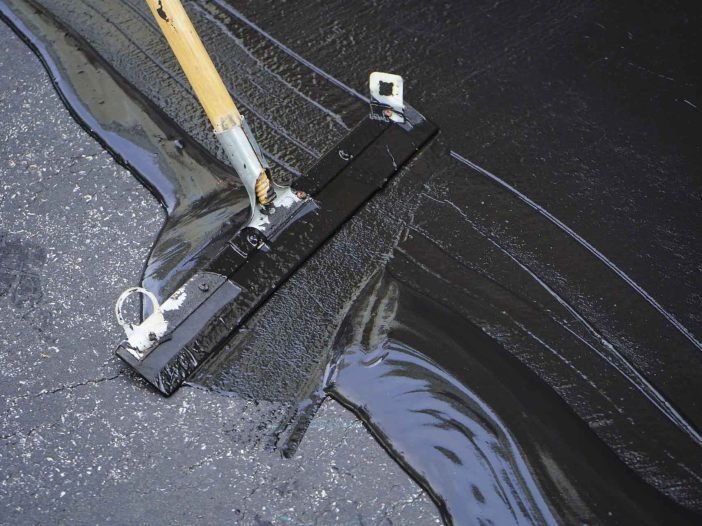
Sealcoating applies a protective layer over existing asphalt. It does three things well:
- Blocks UV damage. The Central Valley's intense sun oxidizes and fades asphalt over time, making it brittle. Sealcoating slows that process significantly.
- Resists water infiltration. It fills hairline surface cracks and creates a barrier that keeps rain from reaching the base layer.
- Restores appearance. Fresh sealcoating returns the dark, uniform look of new asphalt and makes clean line striping possible on commercial surfaces.
What sealcoating doesn't do: it won't strengthen a compromised base, bridge structural cracks, or fill potholes. The National Asphalt Pavement Association is clear that sealcoating is a maintenance tool — effective when the pavement underneath is sound, ineffective as a repair when it isn't.
Signs Your Driveway Is a Good Candidate for Sealcoating
- Surface looks faded or gray but feels firm underfoot
- Hairline cracks under ¼ inch wide — no connected crack patterns
- Your last sealcoat was 3+ years ago and you've maintained the driveway consistently
- No soft spots or areas that sink under vehicle weight
- Edges are intact — no crumbling along the sides
- No standing water or drainage problems after rain
If most of these match your driveway, a professional sealcoat in Fresno is likely the right call — at $0.15–$0.35 per square foot, it's a cost-effective way to add 3–5 years of life and prevent small issues from growing.
Signs Your Driveway Needs Full Replacement
- Alligator cracking — interconnected crack patterns that look like reptile skin. This indicates base failure, not surface wear.
- Potholes — once the surface has broken through to the base, sealcoating won't fix it.
- Deep or wide structural cracks — cracks wider than ½ inch or that run through the full depth of the pavement.
- Soft or spongy spots — areas that flex under vehicle weight signal that the subbase has failed.
- Standing water and drainage failure — if water consistently pools after rain, the grade or base has shifted.
- Extensive edge crumbling — when the edges are breaking away across most of the driveway's perimeter.
- Age 25+ years with no maintenance history — the base layer may be compromised even if the surface looks manageable.
When these conditions are present, sealcoating is money spent on a surface that's already failing. Full replacement restores the base, not just the surface — and prevents the progressive failure that leads to more expensive work later.
The In-Between Option: Resurfacing
Between sealcoating and full replacement sits a middle option: resurfacing (also called an asphalt overlay). A new layer of asphalt is poured over the existing surface, extending life by 8–15 years at roughly half the cost of a full tearout.
Resurfacing works when:
- The surface layer is significantly worn or damaged, but the base is still structurally sound
- You have moderate cracking without the alligator pattern that indicates base failure
- The driveway's drainage and grade are still correct
It doesn't work when the base has failed — an overlay on a compromised foundation will mirror the same problems within a few years.
Cost Comparison: What Each Option Runs in Fresno
| Service | Typical Cost (per sq ft) | Best For |
|---|---|---|
| Sealcoating | $0.15 – $0.35 | Sound asphalt with surface wear and minor cracking |
| Crack filling | $1.00 – $3.00 / linear ft | Isolated cracks under ½" wide |
| Resurfacing / overlay | $1.50 – $3.50 | Surface damage with a solid, intact base |
| Full replacement | $3.00 – $7.00 | Base failure, alligator cracking, potholes, drainage issues |
How Often Should You Sealcoat in Fresno's Climate?
A common recommendation in moderate climates is to sealcoat every 3–5 years. In the Central Valley, the timeline tightens. Fresno's intense UV exposure and heat accelerate oxidation — we typically recommend sealcoating every 2–3 years to maintain protection before the asphalt starts to dry out and become brittle.
Getting on a consistent maintenance schedule is far less expensive than catching up after years of deferred care. A driveway sealcoated regularly can reach 25–30 years without full replacement; one that's never maintained may need replacement in 10–15 years.
The Danger of Waiting Too Long
Pavement damage compounds. A small surface crack left untreated lets water into the base layer. Water erodes the base, which causes the surface to sink and crack further. What was a $300 crack-fill job in spring becomes a $4,000 section replacement by fall.
If your driveway is showing early warning signs — fading, hairline cracks, a few soft spots — acting now is almost always cheaper than waiting to see what happens. Get a free on-site assessment from our team, and we'll tell you exactly what your driveway needs and what it doesn't.
Frequently Asked Questions
Can I sealcoat over cracks?
For hairline cracks, yes — sealcoating fills and seals minor surface cracking. For cracks wider than ¼ inch, crack filling should be done first before sealcoating. Structural or alligator cracks require more than sealcoating can address.
How long does sealcoating take and how long before I can drive on it?
Most residential driveways can be sealcoated in a few hours. You'll want to stay off the surface for 24–48 hours to allow it to cure fully — shorter in Fresno's dry summer heat, longer in cooler or humid conditions.
My driveway is 15 years old. Does it automatically need replacement?
Not necessarily. Age matters less than condition. A 15-year-old driveway that's been sealcoated regularly and had cracks filled promptly may have many years of life remaining. A 10-year-old driveway with no maintenance and serious alligator cracking may already need replacement. On-site condition matters more than age alone.
Will sealcoating fix my pothole?
No. Potholes require patching first — the hole is cleaned, filled with new asphalt material, and compacted. Once the patch is in, the area can be sealcoated as part of the broader surface treatment. Sealcoating over an unfilled pothole won't hold and will fail quickly.
Not Sure What Your Driveway Needs? We'll Tell You Straight.
Golden Valley Paving provides free on-site assessments across Fresno, Clovis, Visalia, and the wider Central Valley. We'll look at your driveway, give you an honest read on its condition, and recommend the service that actually makes sense — nothing more.
Schedule a free assessment online or call us at (559) 765-7172.