

How Is an Asphalt Driveway Paved in Clovis?
Last updated: October 2026
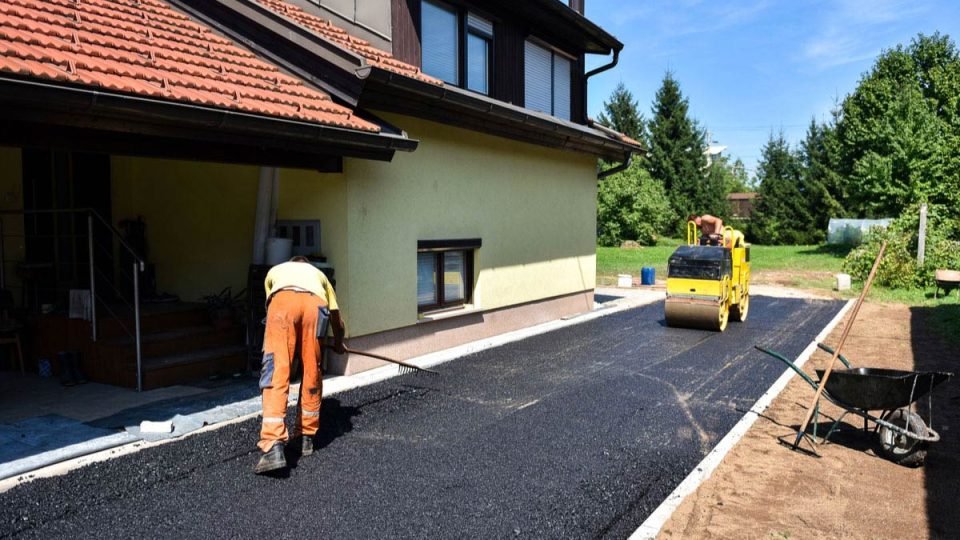
Short answer: Asphalt driveway paving in Clovis starts with removing the old surface, grading the ground so water drains away from the house, and compacting a layer of crushed aggregate base. Hot-mix asphalt is then laid, usually 2 to 3 inches thick for a home driveway, and rolled smooth. Most residential driveways are paved in a day or two, and you can typically drive on them within a few days.
The part you can't see, the base and the drainage, decides whether a driveway lasts decades or starts cracking in a few summers. That's where most of the work goes.
What Are the Steps to Paving a Driveway?
Every Clovis driveway is a little different, from older homes near Old Town to newer subdivisions on the northeast side. The core process stays the same:
- Site walk and layout. We measure the driveway, check slope and drainage, and look for soft spots, tree roots and failed sections.
- Removal. Old asphalt, concrete or gravel is broken out and hauled away. Removed asphalt can be recycled into new mix.
- Grading. The subgrade is shaped so water runs toward the street or yard, never toward your garage or foundation.
- Base installation. Crushed aggregate base is spread and compacted. This layer carries the weight of your vehicles.
- Paving. Hot-mix asphalt is placed while it's still hot and workable, then compacted with a roller.
- Edges and transitions. Edges are tapered and tied in cleanly at the garage slab, sidewalk and street apron.
If your current driveway is cracked but not crumbling, a full tear-out may not be needed. Our guide on when to repair, resurface or replace a cracked driveway walks through the difference.
Why Does the Base Matter So Much in Clovis?
Asphalt is flexible. It moves with the ground under it. If the base is thin or poorly compacted, the asphalt sinks and cracks no matter how good the top layer looks on day one.
Clovis summers regularly push past 100°F, and that heat softens asphalt. A solid, well-compacted base keeps the surface from rutting under parked cars and turning tires during the hottest months. Good drainage matters just as much. When winter rain soaks into a weak base, it softens and the driveway starts to fail from below.
How Long Before You Can Drive on a New Asphalt Driveway?
Most homeowners can drive on a new driveway after about two to three days. Asphalt keeps curing and hardening for months after that, so a few habits help in the first season:
- Avoid turning your steering wheel while the car is sitting still. It can scuff a fresh surface.
- Keep RVs, trailers and heavy delivery trucks off it for the first few weeks.
- Don't park in the exact same spot every day during the first summer.
- Keep motorcycle and trailer kickstands off the surface, or use a small board under them.
Once the asphalt has fully cured, regular sealcoating protects it from sun and water. See our seal coating service for when and how that's done.
When Is the Best Time to Pave a Driveway in Clovis?
Asphalt needs warm, dry conditions to compact properly. Most paving crews want air and ground temperatures of at least 50°F and rising. In Clovis that means late spring through fall is the main paving season. October and early November still bring warm, dry days, so fall is a good window before the rainy season sets in. We cover timing in more detail in why summer is the best time to pave a driveway.
Do You Need a Permit for a Driveway in Clovis?
Replacing a driveway on your own property usually doesn't need much paperwork. Work that touches the city sidewalk, curb or street apron, the part in the public right-of-way, typically needs a permit from the city. If you live in an HOA neighborhood, your HOA may also have rules about materials and edging. We'll tell you during the estimate whether your project touches the right-of-way.
Is Asphalt the Right Choice for Your Driveway?
Asphalt costs less up front than concrete, can be repaired in sections, and handles heat without the spalling you sometimes see on concrete. It does need sealcoating every few years. If you're still deciding, compare your options in our driveway material guide. The National Asphalt Pavement Association is also a good source on how asphalt pavements are designed and built.
Frequently Asked Questions
How long does it take to pave a driveway in Clovis?
Most residential driveways take one to two days, including removal, base work and paving. Larger driveways, or ones that need extra drainage work, can take longer.
How thick should an asphalt driveway be?
A typical residential driveway gets 2 to 3 inches of compacted asphalt over a compacted aggregate base. Driveways that see RVs or heavy trucks may need a thicker section.
Do you serve all of Clovis?
Yes. We pave driveways throughout Clovis, Fresno and the surrounding Central Valley. See our full list of areas we serve.
When should I sealcoat a new driveway?
Give new asphalt time to cure first, usually six months to a year, before the first sealcoat. After that, most driveways benefit from sealcoating every two to three years.
Get Your Free Driveway Estimate
Golden Valley Paving Inc is a family-owned, licensed and insured paving contractor with 20+ years of experience and 500+ projects completed across Fresno, Clovis and the Central Valley. Learn more about our driveway and paving services.
Get your free estimate and we'll respond within 1 business day. Or call (559) 765-7172. We're open 7 days a week.