
Is Your Pavement Ready for Rainy Season?
Last updated: October 2026
Short answer: To prepare asphalt for Fresno's rainy season, fill cracks, fix low spots where water pools, clear drains, and sealcoat if the surface is gray and dry. Do it in October or early November, while days are still warm and dry enough for crack filler and sealcoat to cure. Water getting under the pavement through cracks is the main reason asphalt fails in winter.
Fresno gets most of its roughly 11 inches of yearly rain between November and March. That isn't a lot, but after a long, hot summer has dried out and opened up your pavement, even a few storms can do real damage.
Why Is Rain Hard on Asphalt?
Asphalt itself handles water fine. The problem is what's underneath. When water seeps through cracks, it soaks the aggregate base and the soil below it. A wet base gets soft. Then every car and truck that drives over it pushes the asphalt down a little more. That's how small cracks turn into alligator cracking, sinking spots and, eventually, potholes.
Summer sets this up. Months of 100°F heat and strong sun dry out the asphalt binder, which makes the surface brittle and more likely to crack. Fall is when you close those openings before water can use them.
What Should You Check Before the First Storm?
Walk your driveway or lot and look for:
- Cracks wider than about a quarter inch. These let water straight into the base.
- Alligator cracking. A pattern that looks like reptile skin usually means the base is already weak.
- Low spots and birdbaths. Places where water pooled after the last rain, or where you can see dried dirt rings.
- Clogged drains and gutters. Leaves and debris that will send water across the pavement instead of off it.
- Gray, faded surface. A sign the protective layer is gone and the asphalt is drying out.
- Edges breaking off. Unsupported edges crumble faster when the soil next to them gets wet.
What Fall Maintenance Should You Do?
1. Fill the cracks
Crack filling is the single most cost-effective thing you can do before winter. Hot-applied crack filler seals the opening so water stays on top of the pavement, where it belongs.
2. Repair failed areas
Sections with alligator cracking or potholes need more than filler. The damaged asphalt is cut out and replaced with new hot-mix so the patch bonds and holds through the season. Our asphalt repair services cover this.
3. Fix drainage
Standing water shortens pavement life. Clearing drains is easy. Low spots may need to be built up or regraded so water runs off.
4. Sealcoat if it's due
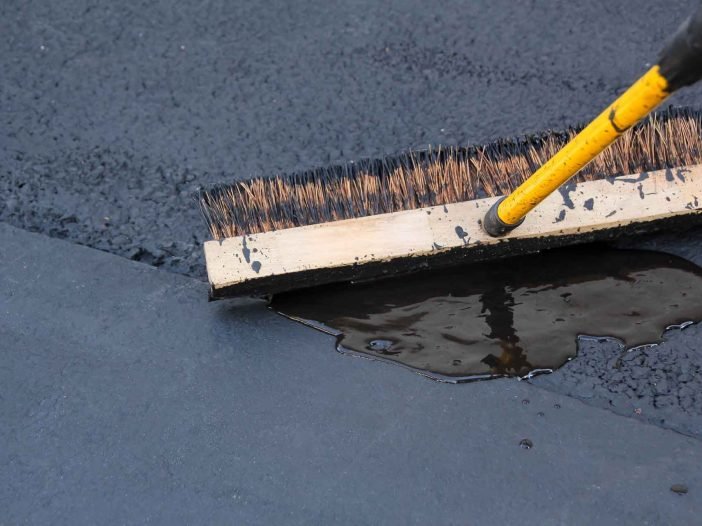
Sealcoat seals the surface and slows water and sun damage. It needs dry weather and mild temperatures to cure, which is why fall is your last good window of the year. Learn more about how sealcoating protects asphalt.
Is It Too Late Once the Rain Starts?
Not entirely, but your options shrink. Crack filler and sealcoat need a dry surface, and sealcoat needs temperatures that stay above roughly 50°F while it cures. Between storms there are often dry stretches, but the cooler, foggy days of December and January make curing slower and scheduling harder. The best time to do this work is before the rain arrives.
What If the Pavement Is Already Too Far Gone?
If more of the surface is cracked than not, or large areas are sinking, maintenance won't buy much time. You may be looking at resurfacing or replacement. Our guide on whether your driveway needs sealcoating or full replacement walks through the signs. The National Asphalt Pavement Association also has good background on pavement maintenance.
Frequently Asked Questions
When does the rainy season start in Fresno?
Fresno's rainy season usually runs from about November through March, with most rain falling in winter.
Can you sealcoat in winter in Fresno?
It's difficult. Sealcoat needs dry pavement and temperatures above roughly 50°F to cure properly. Winter days are often too cool or damp, so fall is a better time.
How long does crack filling last?
Hot-applied crack filler typically holds up for a few years. Cracks keep moving, so plan to check and refill them as part of regular maintenance.
Do you do fall maintenance for commercial lots?
Yes. We handle crack filling, patching, sealcoating and restriping for parking lots across Fresno, Clovis and the Central Valley.
Book Your Fall Pavement Check
Golden Valley Paving Inc is a family-owned, licensed and insured paving contractor with 20+ years of experience and 500+ projects completed across Fresno, Clovis and the Central Valley. See our seal coating services.
Get your free estimate and we'll respond within 1 business day. Or call (559) 765-7172. We're open 7 days a week.