

Resurface or Replace Your Parking Lot?
Last updated: November 2026
Short answer: Asphalt resurfacing works when your parking lot's base is still solid and the damage is mostly on the surface: fading, small cracks and raveling. Replacement is needed when the base has failed, shown by widespread alligator cracking, sinking areas, potholes that keep coming back, or water that won't drain. Resurfacing costs much less than replacement, but only if the foundation under it is sound.
The key question isn't how bad the lot looks. It's what's going on underneath. A lot can look rough on top and still have a good base, or look fine from a distance while failing below.
What Is Parking Lot Resurfacing?
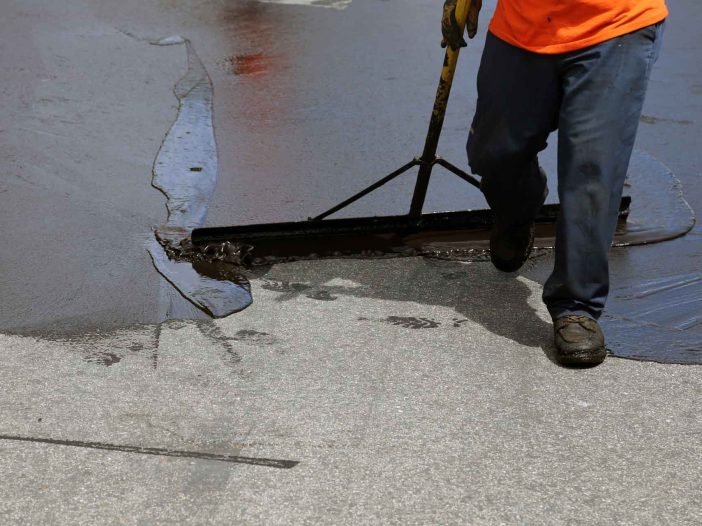
Resurfacing, also called an overlay, puts a new layer of hot-mix asphalt over the existing pavement. Typical steps:
- Repair failed spots by cutting out and patching them.
- Fill cracks.
- Mill the edges, or the whole surface, so the new layer meets curbs, gutters and drains at the right height.
- Apply a tack coat so the new layer bonds to the old one.
- Pave a new asphalt layer, usually around 1.5 to 2 inches, and roll it smooth.
- Restripe.
The result looks and drives like a new lot, without the cost and downtime of removing everything down to the dirt.
When Is Resurfacing the Right Choice?
Resurfacing is usually a good fit when:
- Cracks are mostly small and spread out, not connected in a web.
- The surface is faded, rough or losing stone (raveling), but not sinking.
- Water drains off the lot properly.
- Damaged areas are limited and can be patched first.
- Curb and drain heights leave room for a new layer, or the edges can be milled.
When Does a Parking Lot Need Full Replacement?
A new layer can't fix a bad base. Cracks underneath will work their way up through the new asphalt, often within a few seasons. Replacement makes more sense when you see:
- Alligator cracking across large areas. This pattern points to base failure.
- Sinking, rutting or soft spots. The base or soil below has lost its strength.
- Potholes that keep coming back. The patches fail because what's under them has failed.
- Drainage problems. Water that ponds or runs the wrong way needs regrading, which means starting over.
- Several old overlays already. Lots can only be built up so many times before curbs and drains no longer line up.
Many lots fall in between. It's common to replace the worst sections fully, then resurface the whole lot so it looks uniform.
How Does Fresno's Climate Affect the Decision?
Fresno's summers routinely top 100°F, and that heat ages asphalt fast. The binder dries out, the surface gets brittle, and cracks open up. Then winter rain finds its way into those cracks and softens the base. Lots that have gone several years without sealcoating or crack filling tend to move from "resurface" to "replace" faster here than in milder climates. Catching it early saves money. Our guide on parking lot paving in Fresno covers what drives the cost of each option.
How Long Does Each Option Take?
Resurfacing a typical commercial lot often takes a few days, and it can be phased so part of the lot stays open. Full replacement takes longer because of demolition, base work and grading. Either way, we plan the work around your business hours to keep customers and tenants moving.
How Do You Know Which One Your Lot Needs?
An on-site inspection is the only reliable way to tell. We look at crack patterns, test for soft areas, check drainage and measure curb and drain heights. Then we tell you what's needed, and what isn't. See our commercial paving services and our earlier guide to commercial paving in Fresno. For more background, the National Asphalt Pavement Association publishes guidance on pavement design and rehabilitation.
Frequently Asked Questions
How long does a resurfaced parking lot last?
A resurfaced lot built on a solid base, then sealcoated and crack-filled on schedule, can last many years. How long depends on traffic, drainage and maintenance.
Can you resurface just part of a parking lot?
Yes, but the new section will look different from the rest. Many owners patch or replace the worst areas, then overlay the whole lot for a uniform finish.
Is resurfacing the same as sealcoating?
No. Sealcoating is a thin protective coating. Resurfacing adds a new layer of structural asphalt.
Do you mill before resurfacing?
Often, yes. Milling the edges or full surface keeps the new asphalt level with curbs, gutters and drains.
Get a Free Parking Lot Inspection
Golden Valley Paving Inc is a family-owned, licensed and insured paving contractor with 20+ years of experience and 500+ projects completed across Fresno, Clovis and the Central Valley. See our asphalt services.
Get your free estimate and we'll respond within 1 business day. Or call (559) 765-7172. We're open 7 days a week.